
Nikro Air Duct Cleaning in Upper East Side: A Homeowner’s Guide
Anyone can print “Nikro” on the side of a van. What matters is whether the machine is actually set up to pull debris out of your ducts or just making noise while dust settles back into the same runs. We’ve seen enough job sites to know the gap between a properly configured system and a decorative one is wide. This guide explains what Nikro equipment does mechanically, so you can verify a setup instead of trusting a logo.
If you’d rather have a trained hand run it correctly, call (844) 443-3814. We answer 24/7 and can get fast dispatch from 7am to 7pm.
What Does Nikro Equipment Actually Do in a Duct System?
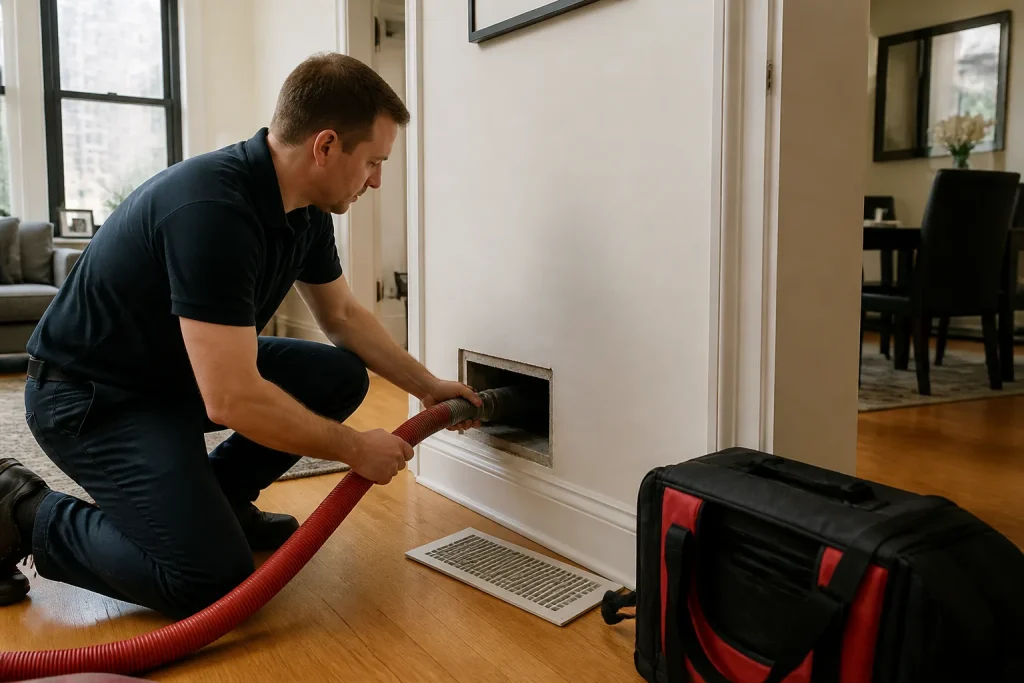
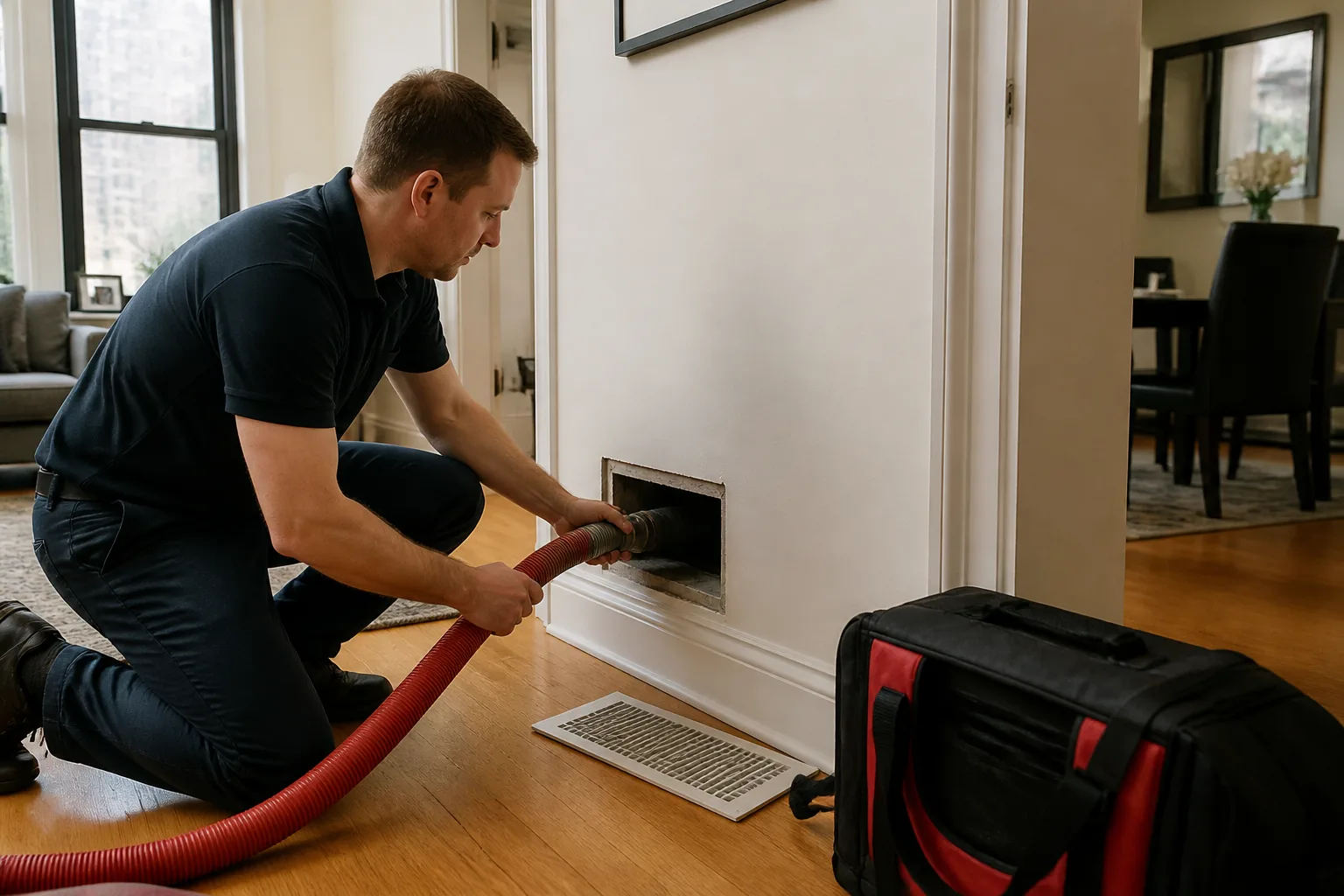
A Nikro unit is a high-CFM negative-pressure vacuum paired with staged HEPA filtration. It doesn’t scrub your ducts itself. It temporarily converts your duct system into a suction plenum, so agitation tools can knock debris loose and the vacuum captures it at the source rather than letting it drift into living space. The machine is the engine; the setup is the steering.
Two specs matter to a homeowner:
- CFM (cubic feet per minute): the air volume the unit moves. Too little and loosened debris never reaches the filter; it just resettles a few feet downstream.
- HEPA filtration stages: the capture layers that keep exhausted air clean. A multi-stage stack captures fine particulate that a single filter passes straight through.
The filters only work if the negative pressure is intact. Break the seal at one register and the system pulls household air from that gap instead of from the run you’re cleaning. On Upper East Side prewar buildings, where returns often share chases between units, that shortcut is more than sloppy. It can pull debris from a neighboring stack.
Why Setup Matters More Than the Brand Name
The most common failure we see in Upper East Side isn’t the wrong machine; it’s the right machine connected at the wrong access. A Nikro unit hooked to a single return, with other registers left open, will register strong suction on the gauge while barely moving air through the actual branch runs. The gauge reads pressure. It doesn’t read progress.
Correct setup follows a sequence:
- Access point selection. The vacuum connects at the main trunk or largest return, chosen to pull air through the longest run of ducting toward the machine.
- Register sealing. Every open grille gets blocked with foam or magnets so the only air the unit can pull comes from inside the duct system.
- Sectioning. Isolating sections lets the technician clean one branch at a time instead of diffusing suction across the whole system at once.
Abatement Technologies negative-air equipment layers on top of that. It holds containment at the work area and exhausts filtered air, so loosened debris never recirculates into the room. That’s a big deal in a high-floor co-op where the neighbor notices first when something goes wrong.
What Should the Camera Show Before and After?
You should see inside your ducts – not a photo of somebody else’s system from a brochure. Before cleaning, an inspection camera run through each register should show the actual condition: dust buildup on duct walls, joint gaps, or a collapsed flex run. After cleaning, a second pass through the same openings should show bare, debris-free duct liner. Same angle, same register, before and after.
Why does documentation matter here? Upper East Side homes are often prewar buildings with original galvanized trunks, added returns, and renovation-era flex runs spliced in along the way. Written records and photos let you compare year over year and give a co-op board or building management hard evidence if questions arise. Rotobrush cameras and a photo log should be standard parts of the job, not extras you have to ask for.
Why Are Air Whips and Skipper Balls Not Optional?
Because suction alone can’t dislodge bonded dust. A vacuum can only pull what’s already loose in the airstream. The dust coating the inside walls of your duct is stuck there. Agitation tools are what break the bond.
Air whips and skipper balls use compressed air to scour the inside of the duct and send loosened debris straight into the return airstream, where the Nikro unit captures it. Without agitation, a “clean” run delivers only loose surface dust. The caked deposit against the duct wall stays put, and so does anything living in it.
Post-agitation, a Guardsman-backed sanitizing treatment applies an antimicrobial layer to interior surfaces. That’s a protection step applied after a duct is genuinely clean, not a substitute for cleaning it. Sanitizer sprayed over debris doesn’t do much except inspire false confidence.
Questions to Ask a Company Using Nikro Equipment
Anyone can list the brand. Here’s what confirms they’re using it at full capacity:
- Which Nikro model do they use, and what’s its CFM rating for your system size?
- How many filter stages does it run, and what HEPA grade?
- What containment equipment sits on site in addition to the Nikro unit?
- How do they seal and section registers during the job?
- Which agitation tools do they use, and are they included in the quote?
- Will they photograph before and after from the same register?
- Do they handle duct repair and sealing if gaps are found?
Consistent answers are a good sign. Vague ones are a signal. For a fuller overview of the process, see our air duct cleaning page.
When to Call a Pro
If you can see visible dust streaking from a supply vent, hear whistling at a register, notice dust returning within days of cleaning, or suspect a sealed or disconnected run, the system needs a proper inspection. Duct seal and repair are not a do-it-yourself job when walls and mechanical chases are involved. We also handle HVAC cleaning and dryer vent cleaning for Upper East Side homes, since those systems are part of the same air pathway.
Related services in Upper East Side: duct repair and sealing, air quality and sanitizing, and dryer vent cleaning.
The Bottom Line
Nikro equipment is a genuine benchmark in the trade. But brand on the van tells you nothing about whether the machine is sealed, sectioned, and paired with the right agitation tools. Verify the setup. Look at the camera. Ask for the before and after from the same register. If you’re in Upper East Side and want a team that runs the equipment at full spec, our technicians have up to 14 years of experience and the full process is documented from start to finish. See our Air Duct Cleaning Upper East Side page for the overall picture. Estimates are free, and the written quote sets the final price. Call (844) 443-3814. We answer 24/7. Fast dispatch from 7am to 7pm, Sunday through Friday.
Frequently Asked Questions
Yes, but as a starting point, not a finish line. Nikro units are professional-grade with the CFM and HEPA filtration to do real work, but the setup is what determines results. Ask about containment, sealing, sectioning, and agitation tools alongside the machine brand. Call (844) 443-3814 for a free estimate and a straight answer on what we use.
Often every 3 to 5 years, more frequently if there’s renovation dust, visible debris, or a system with disconnected runs. Buildings with shared chases benefit from a camera inspection before cleaning rather than a schedule alone. Call (844) 443-3814 to book an assessment.
It can. If the register seals are loose or containment isn’t in place, loosened debris can drift back into living space. That’s why we bring Abatement Technologies negative-air equipment to hold containment. Ask about containment before any job begins. Call (844) 443-3814 for a free estimate.
Same-day service is available when scheduling allows. We answer 24/7 and dispatch Sunday through Friday, 7am to 7pm. A call outside dispatch hours is booked into the next opening. Call (844) 443-3814 for a free estimate.
Written by the team at Air Duct Cleaning Upper East Side.
Need Air Duct Cleaning Help?
Call Air Duct Cleaning Upper East Side - the local pro we connect you with is licensed and insured, with free written estimates in Upper East Side.
(844) 443-3814