
Last updated November 22, 2026
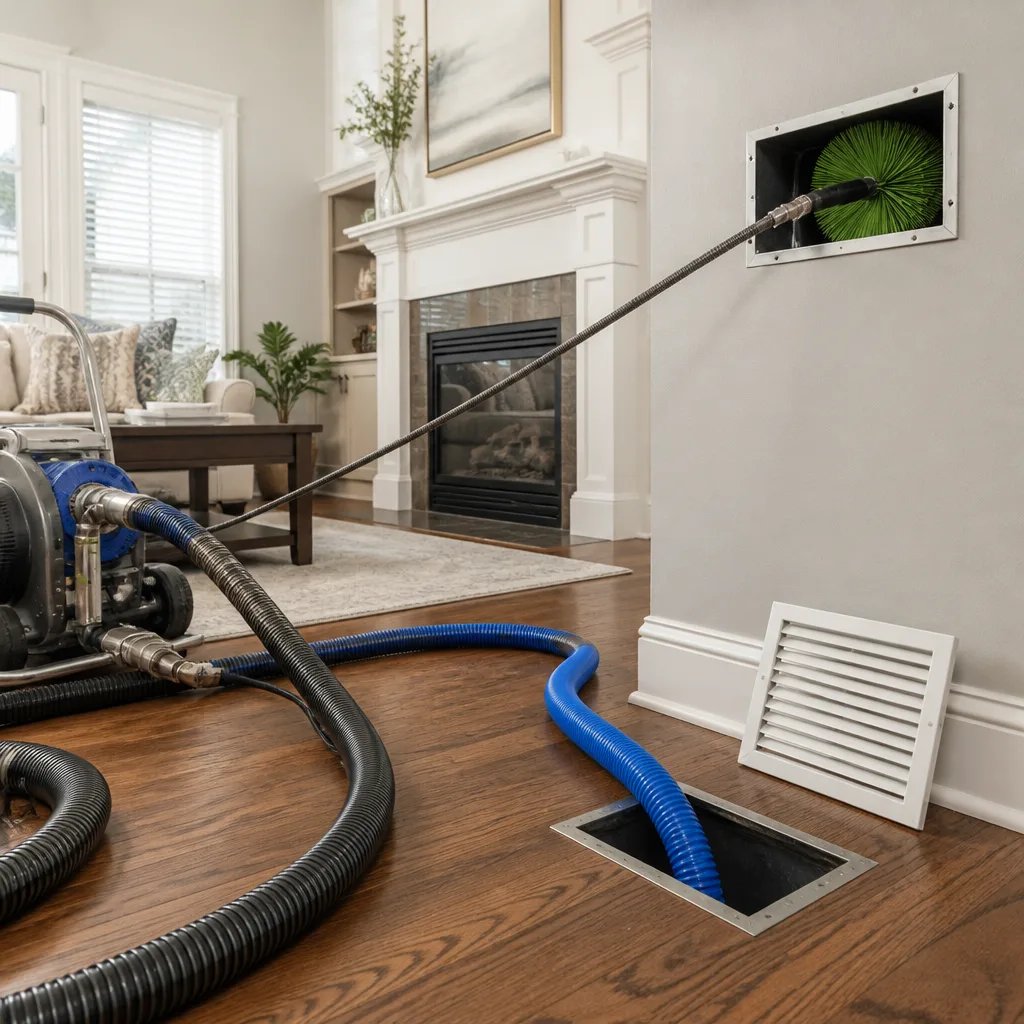 Whole-home duct cleaning
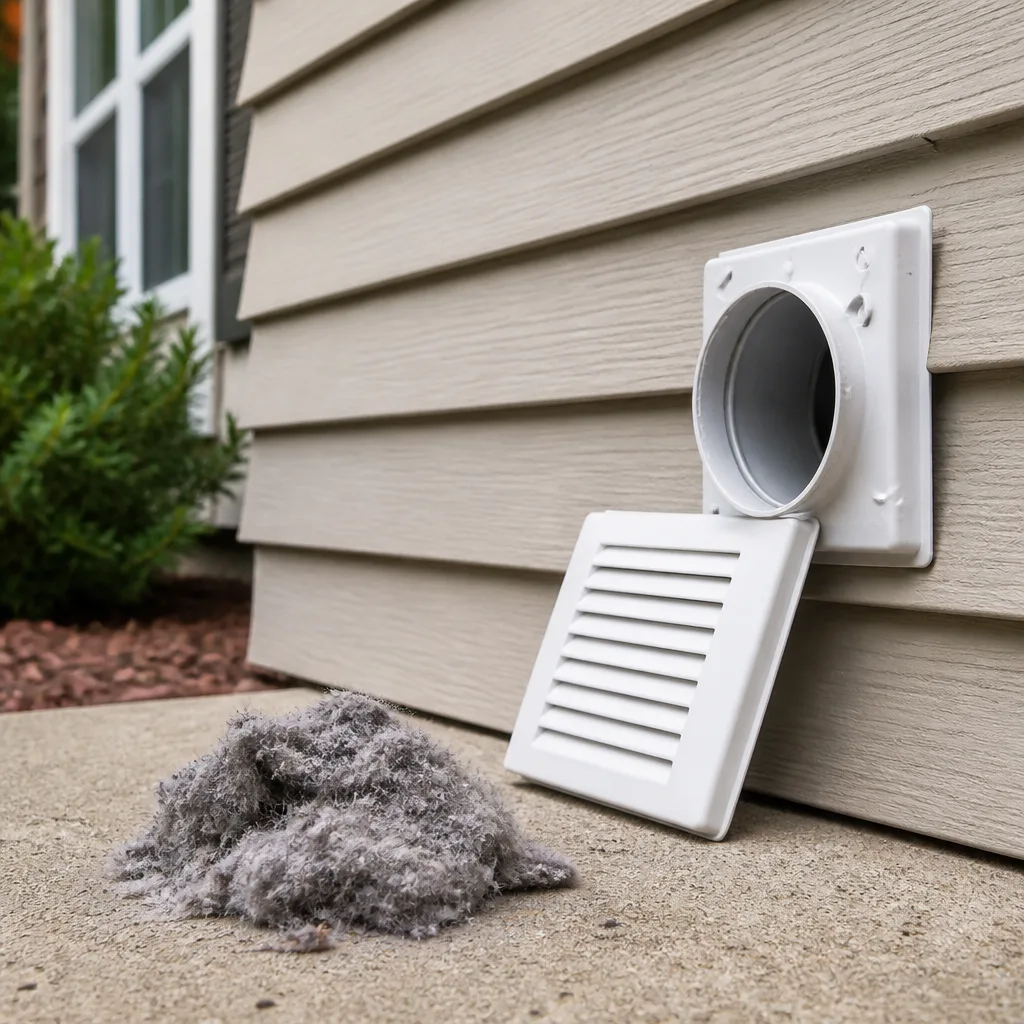 Dryer vent cleaning
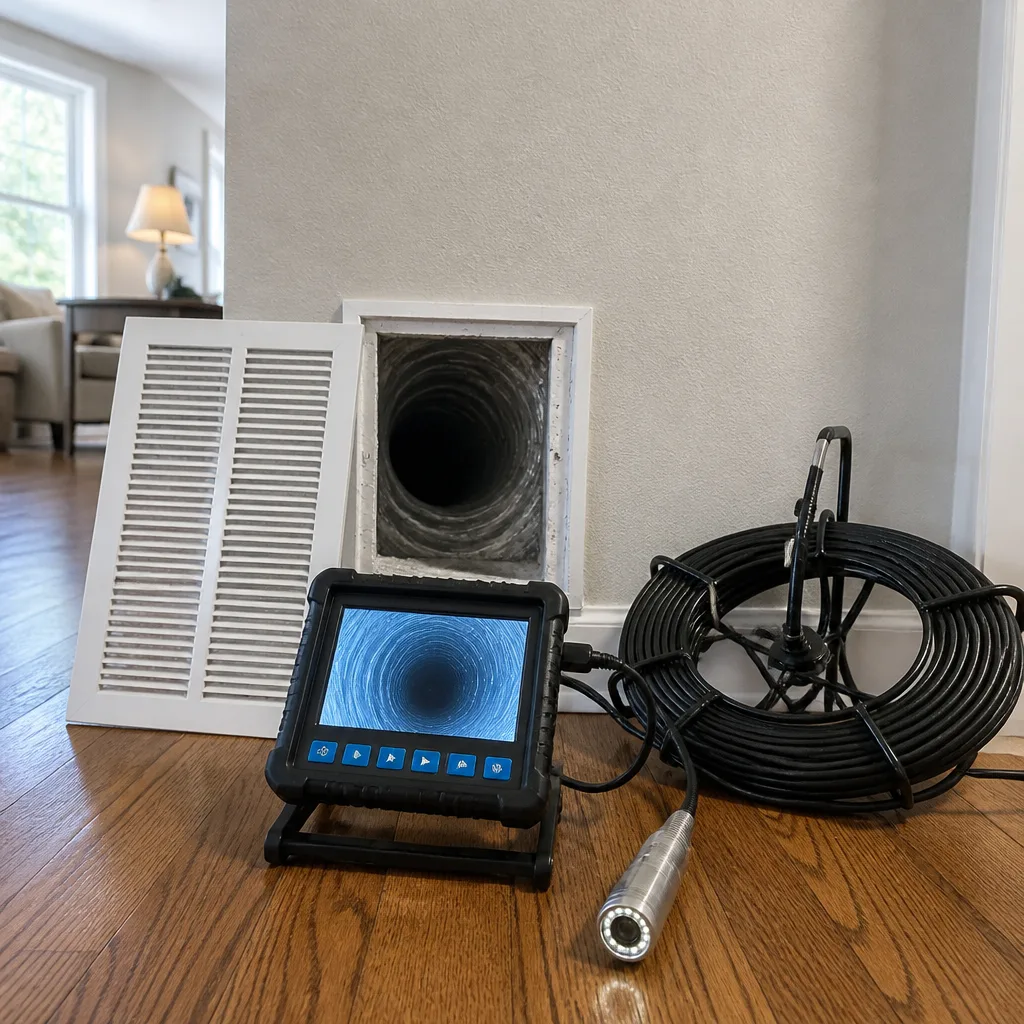 Camera inspection
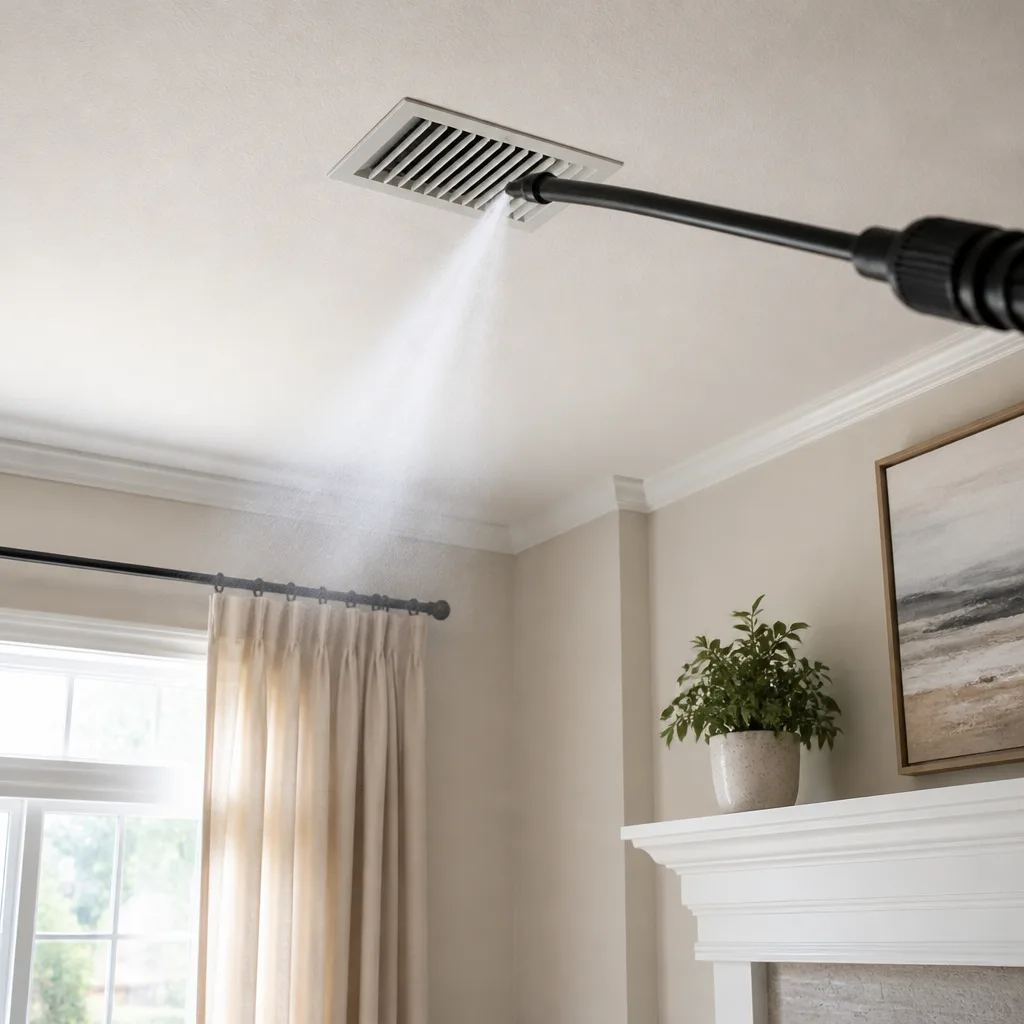 Sanitizing & deodorizing
Whole-system duct and dryer vent check with before-and-after photos - you see exactly what came out of your vents
That "$99 whole-house special" is a bait ad - the real number appears once they are in your hallway, or the "clean" is a shop-vac at the register. We photograph the inside of your ducts before and after instead.
Air Duct Cleaning Troubleshooting in Upper East Side: Common Problems and How to Fix Them
Six months after a duct cleaning, the musty smell returns. Homeowners in Upper East Side often assume the cleaning was bad or the technician cut corners. Usually neither is true. The smell came back because the source was never in the ducts to begin with: a wet drain pan under the air handler, a fouled evaporator coil, a bypass damper stuck open. The vents were downstream of the problem, so cleaning them changed the symptom without touching the cause. This guide maps the symptoms you can observe at home to the components that actually produce them, so you can describe what’s happening in precise terms and know what a technician should inspect before anyone proposes work.
Quick Answer
Most recurring duct complaints in Upper East Side trace to four sources: a contaminated evaporator coil or drain pan, a failed damper or collapsed flex run, duct leakage at joints and boots, or the shared riser systems common in pre-war co-ops. Cleaning registers rarely fixes any of them. A correct diagnosis starts at the air handler and works outward, not the other way around.
Styles & brands we work with
- Whole-home duct cleaning
- Dryer vent cleaning
- Camera inspection
- Sanitizing & deodorizing
Table of Contents
- Mapping Symptoms to Their Real Sources
- Why Odors Come Back After a Cleaning
- Uneven Airflow: Damper or Duct Problem?
- Telling Duct Leakage Apart from Blockage
- Building-Specific Issues in Upper East Side Co-ops
- What a Technician Should Actually Inspect
- Questions to Ask Before You Approve Any Work
- Keeping the System Clean Between Visits
Mapping Symptoms to Their Real Sources
The most useful troubleshooting skill is translating what you notice in a room into which part of the system is likely responsible. Dust on a register grille, stale air in one bedroom, a whistle when the heat kicks on: these are three different mechanical stories, and none of them starts at the grille. Working from symptom to source saves money because it stops a crew from cleaning the whole system to address a fault that lives in one component.
Here’s how the common complaints usually break down:
- Dust collecting on register louvers fast. Often a filter problem or a return-air boot pulling from an unconditioned cavity, not a duct full of debris. Fine gray dust on the supply side points toward the coil or blower.
- One room never gets enough air. Almost always a damper position, a crushed or disconnected flex run, or a leak in the trunk. A dirty register is on the list but near the bottom.
- Musty or damp smell that fades and returns. Standing water or biological growth at the cooling coil, the drain pan, or the interior insulation of the air handler.
- Whistling or hissing while the system runs. A leak at a joint, boot, or duct collar. Whistles are air escaping, not air blocked.
- Whole-home dust that resets days after cleaning. A containment or filtration failure upstream. The blower is moving contamination back into the air path from somewhere the last crew never opened.
In Upper East Side apartments, we’ve seen the one-room problem misdiagnosed most often. A bedroom that never cools can sit behind a damper someone closed during a renovation years ago, and no amount of cleaning will move air through a blade that’s perpendicular to the flow. Before any cleaning estimate, ask specifically whether the technician will check damper positions and flex duct condition. If the answer focuses only on the vents, the diagnosis is incomplete. Our Air Duct Cleaning Upper East Side team treats that inspection as step one of every job, not a separate line item.
Why Odors Come Back After a Cleaning
If a musty smell returns within months of a cleaning, the ducts were never the reservoir. The reservoir is whatever stays wet. Dust and debris only support biological growth in the presence of moisture, and in most systems that moisture sits in three places: the condensate pan under the coil, the coil fins themselves, and the damp interior lining of the air handler cabinet. Cleaning the duct runs downstream of that wet zone interrupts the smell for a while, then the blower pushes the odor right back through the same ducts.
The typical sequence for a proper odor investigation looks like this:
- Open the air handler and inspect the evaporator coil and drain pan directly. Look for standing water, slime, or a rusted pan with no pitch to the drain.
- Check that the condensate trap is primed and draining. A dry trap can let sewer gas back into the airstream.
- Inspect the interior insulation of the air handler for dark staining or soft spots that hold moisture.
- Only then evaluate the duct runs for visible growth, especially in the first few feet after the plenum where cold air and warm surfaces meet.
- Confirm the return side is sealed. A return boot open to a wall cavity pulls basement or chase air into the living space, and that air brings its own smell with it.
One more point that gets skipped: sanitizing a wet coil does not fix a wet coil. An antimicrobial treatment applied after a proper cleaning helps, and a Guardsman-backed sanitizing treatment gives you documented protection inside the ductwork. But the moisture has to be corrected first or the growth returns. When we quote a full system job, that’s the reasoning behind pairing air duct cleaning with an air handler inspection rather than treating the vents as the whole story. The smell isn’t the problem; the wet surface is.
Uneven Airflow: Damper or Duct Problem?
Uneven airflow across rooms is almost never a cleanliness issue. Air either has a path or it doesn’t. When one room underperforms, the cause is a closed or broken damper, a crushed flex duct, a supply register that was swapped for a low-flow grille during a renovation, or a leak that’s stealing pressure from that run. You can narrow it down yourself with two cheap pieces of information: a tissue held to the grille and a pressure reading at the filter.
Start with these observations before calling anyone:
- Tissue test at the register. Weak but steady flow suggests a restriction or low blower speed. Pulsing or intermittent flow suggests a duct problem such as a disconnected run or a damper flapping.
- Filter pressure. A clogged filter drops flow to every room. Swap it and recheck before diagnosing anything else.
- Compare rooms. If one supply is weak but the returns in that area pull hard, the supply side is restricted. If both are weak, the problem is upstream at the blower or filter.
- Look for flex duct sag. A flex run that loops or pinches loses most of its capacity. It’s common in apartments where ductwork was rerouted during a renovation.
In pre-war Upper East Side buildings, damper location is the question that eats the most time. Older systems sometimes have volume dampers buried above a ceiling or behind a soffit, installed decades ago and forgotten. A technician should be able to point to the damper and show you its position, not just say it “looks fine.” If a contractor proposes a full cleaning to fix one cold room, ask them to demonstrate the restriction first. Airflow you can measure; cleaning you can’t verify by feel.
Telling Duct Leakage Apart from Blockage
Leakage and blockage both produce weak airflow, but they behave differently under pressure, and that difference matters because the fixes are opposite. A leaky duct loses air into a wall or ceiling cavity. A blocked duct has air trapped behind the restriction. One makes the system work harder to deliver less; the other starves a specific run. If you get the diagnosis wrong, you can spend money sealing a duct that was actually crushed and disconnected.
Here’s a pressure-based way to tell them apart before anyone arrives:
- Close every supply register in the home except one. If flow at that register jumps noticeably stronger, the system is capacity-limited and probably restricted somewhere central.
- Reopen all registers. If the marginal rooms stay weak while close rooms stay strong, the imbalance is at the damper or branch level, not the main trunk.
- Run the system and hold a tissue near the seams of visible ductwork, especially at the plenum and boots. A fluttering tissue at a seam is air escaping, which means leakage.
- Check the return grille for strong pull. A weak return combined with weak supplies points to a blockage or a failing blower, not leakage.
- Smell check inside closets and wall cavities near ducts. Dusty or musty air where no register exists is a sign of an open leak into an unconditioned space.
Once leakage is confirmed, the fix is HVAC cleaning plus sealing at the joints, collars, and boots. A good job includes both. Sealing without cleaning traps debris behind a repaired joint; cleaning without sealing leaves the leak reintroducing dust the moment the system runs again. We treat duct repair and sealing as part of the job for exactly that reason: the system has to be both clean and tight, or it recontaminates itself in weeks.
Building-Specific Issues in Upper East Side Co-ops
Upper East Side housing stock shapes the troubleshooting. Pre-war co-ops along the avenues were built with shared mechanical chases, and many still carry original galvanized ductwork that has been patched, rerouted, and sealed over many renovations. Add the way these buildings handle risers and the picture gets specific: duct problems here often involve how one apartment’s system interacts with the chase it shares with neighbors, not just what’s inside the walls of a single unit.
What shows up in Upper East Side buildings:
- Shared risers. Return and exhaust shafts running through a building can carry odors and debris from one apartment into another. If a smell appears only when a neighbor runs their system, the chase is part of the story.
- Original galvanized ductwork. Decades-old galvanized runs develop seam failures and interior corrosion. Corrosion holds dust and moisture where newer sheet metal doesn’t.
- Renovation-era flex duct. Later remodels often introduced short flex runs connected to old rigid trunk. The transition points are where leaks and disconnections cluster.
- Tight closets around air handlers. Apartments here pack mechanical equipment into small spaces, so a wet pan or fouled coil is easy to miss and hard to reach without careful work.
- Building rules and co-op board access. Many buildings require notice before work above ceilings or in shared chases. Ask your building management what’s needed before scheduling; the work itself must be coordinated with the building, not just the apartment.
None of this is exotic. It just means that a duct diagnosis in an Upper East Side co-op needs to include at least a look at where the unit’s ductwork meets the building’s shared structure. A crew that only opens registers and runs a brush through the visible runs leaves the chase and the corrosion issues untouched.
What a Technician Should Actually Inspect
Before any cleaning proposal, a technician should walk the system from the air handler to every supply and return, and be able to tell you what they found and where. That’s the standard. If a technician arrives and quotes a cleaning before opening the air handler, you’re being sold a service, not diagnosed.
A complete inspection includes these stops, in this order:
- Air handler cabinet. Coil condition, drain pan, insulation, and blower wheel. Ask for photos of each.
- Filter and return. Filter sizing and fit, return boot sealing, and whether the return is pulling from a cavity it shouldn’t.
- Main trunk and plenum. Seam integrity, corrosion, and any visible debris accumulation, checked with a camera where reachable.
- Branch runs. Flex condition, disconnections, sag, and damper position for each branch.
- Registers and boots. Not for cleaning, but for seating, sealing, and evidence of dust patterns that point back to a source.
The equipment a crew brings tells you how seriously they take containment. Rotobrush and Nikro rotary brush systems are professional-grade tools used in commercial and healthcare settings, and Abatement Technologies negative-air equipment keeps loosened debris contained during service instead of letting it recirculate into the apartment. If the crew shows up with a shop vacuum and a wand, the work cannot be contained, and that limits what the inspection can honestly claim. That’s the reasoning behind our equipment choice: the diagnosis is only as good as what you can safely see and reach.
Questions to Ask Before You Approve Any Work
The right questions, asked at the right moment, separate a diagnostic cleaning from an upsell. Ask them before the estimate becomes a work order, not after.
- “Show me the air handler before we go further.” A clean coil and dry pan mean the ducts are a fair target for cleaning. A wet coil means the air handler is the first job.
- “Which dampers did you check, and what positions were they in?” If they can’t name a damper, they haven’t diagnosed the airflow.
- “How do you contain debris during cleaning?” Look for negative-air equipment and a clear explanation of how the return is isolated. If they can’t describe containment, the cleaning will redistribute dust as much as remove it.
- “Will you check for leaks and seal them, or just clean?” Cleaning without addressing leakage undoes itself. Ask about sealing at boots, joints, and collars.
- “What’s the price per system, and is it flat?” One flat price per system, agreed before work starts, with no per-vent arithmetic and no coupon bait. Before-and-after photos of your own ducts should be part of the deal.
- “What does the sanitizing step include?” If they sanitize, ask what product and what it protects. An antimicrobial treatment is only a finishing step after a proper cleaning, not a substitute for it.
Our written estimate sets the price before a technician touches anything, and our technicians have up to 14 years of experience to ground the diagnosis. If a walkthrough doesn’t answer these questions cleanly, you’re within your rights to wait.
Keeping the System Clean Between Visits
The work you do between professional visits decides how long a cleaning holds. Most of it is inexpensive and easy, and none of it requires opening anything a homeowner shouldn’t touch.
- Change the filter on a schedule matched to your building. In older Upper East Side co-ops with shared risers and dusty chases, filters load faster than the box suggests. Check monthly and replace when visibly gray.
- Keep the drain pan dry. Every few months, look under the air handler during cooling season. Standing water means a call, not a wait.
- Vacuum registers gently. A quick pass on the louvers keeps dust from shedding into rooms. Don’t remove grilles to reach deeper.
- Watch for new whistles. A new hiss after a renovation or repair is a leak. Note when it started and which room it’s in.
- Ask about upgraded filtration. A better filter setup, or a whole-home air-quality product, can reduce how often the system needs cleaning. Honeywell and Aprilaire products are designed for exactly this, and they can be serviced alongside the cleaning.
- Address leaks early. A small seam leak grows. Sealing early is cheaper than cleaning twice.
One additional area that gets overlooked and matters: dryer vents. Lint buildup in a dryer vent is a fire risk and a separate system from your HVAC ductwork, which is why we offer dryer vent cleaning as a standalone service. It isn’t part of the air ducts, and it deserves its own look.
Common Mistakes to Avoid
- Assuming every smell comes from the ducts. Most returning odors trace to the coil or drain pan. Cleaning the vents to fix a musty smell is aimed at the wrong target.
- Cleaning without containing. A cleaning without negative-air equipment pushes loosened debris back into the apartment. Ask how the crew contains debris before they start.
- Skipping the air handler inspection. In tight Upper East Side mechanical closets, the coil and pan are where the problem usually lives. A quote that never opens the air handler has missed the likely source.
- Diagnosing airflow by feel alone. Every “cold room” call should start with filter condition and damper position. Skipping those two wastes the cleaning budget.
- Cleaning without sealing. A cleaned duct with a leaky boot recontaminates in weeks. Sealing is part of the job, not a later upgrade.
- Confusing leakage with blockage. These need opposite fixes, so it’s worth doing the pressure check before anyone quotes work.
- Ignoring the building. Shared risers and co-op access rules affect both the problem and the schedule. Coordinate with management before booking, then take it from there.
See the difference
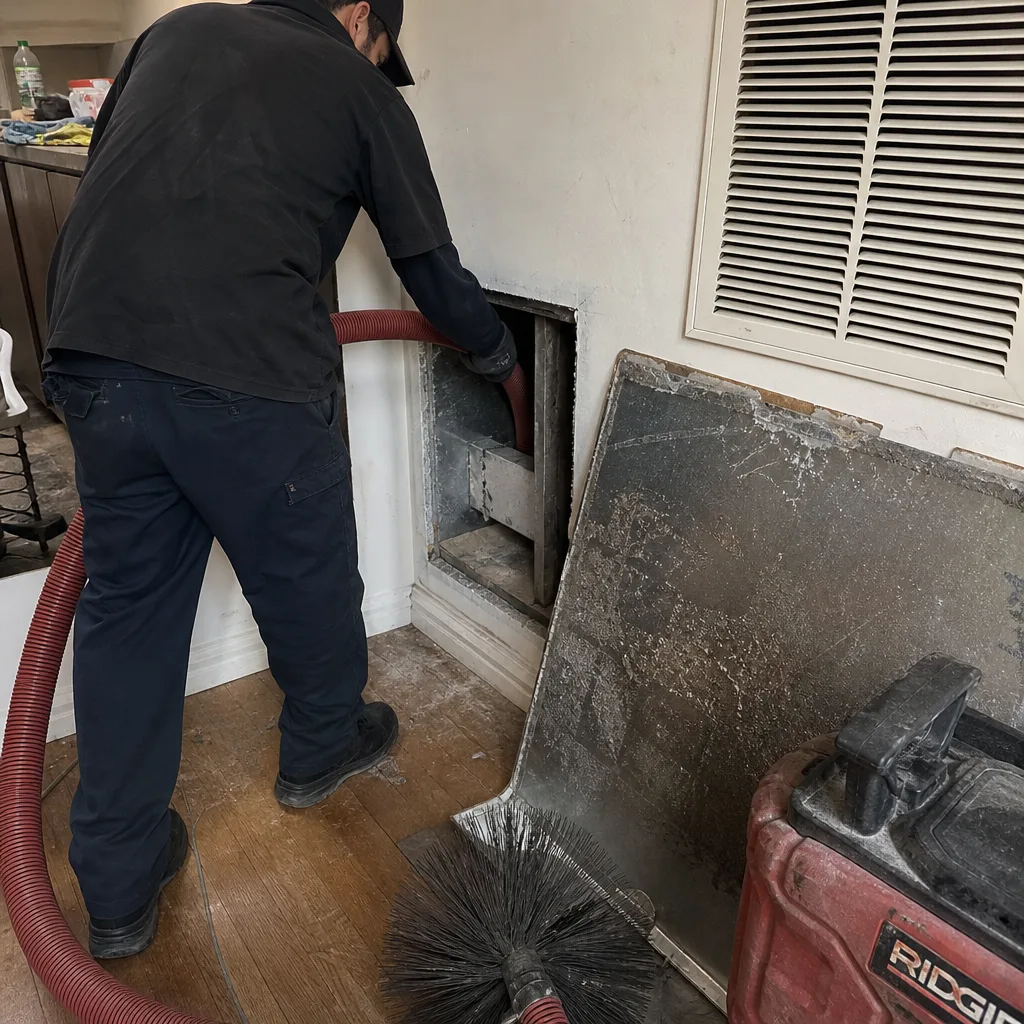 Before
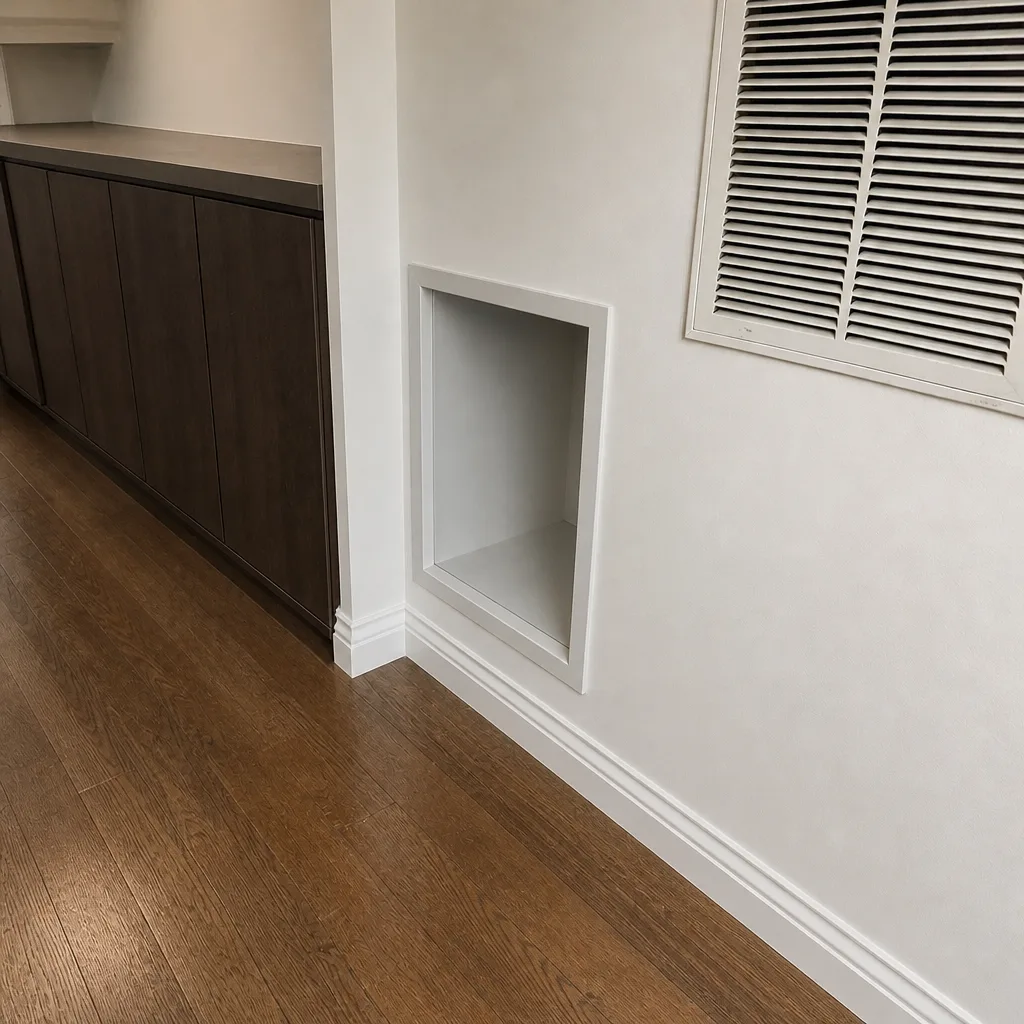 After
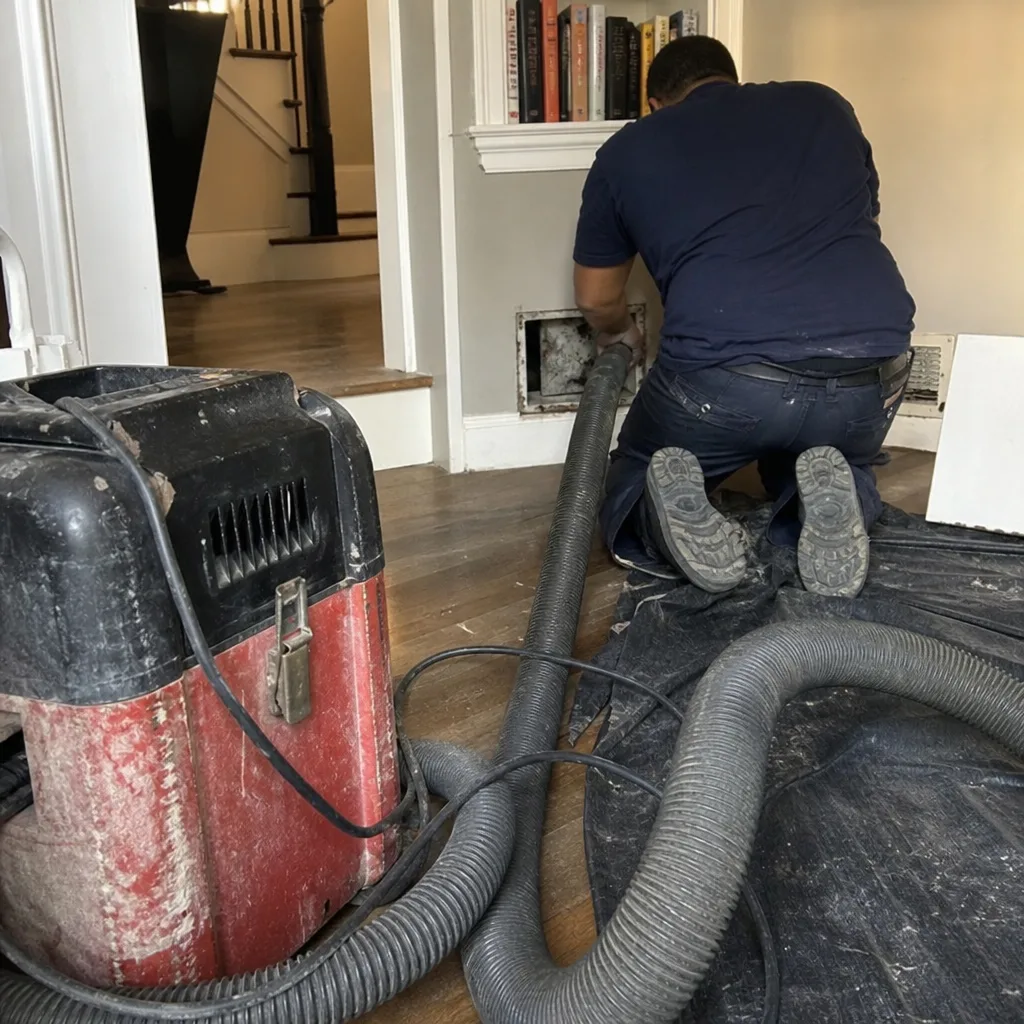 Before
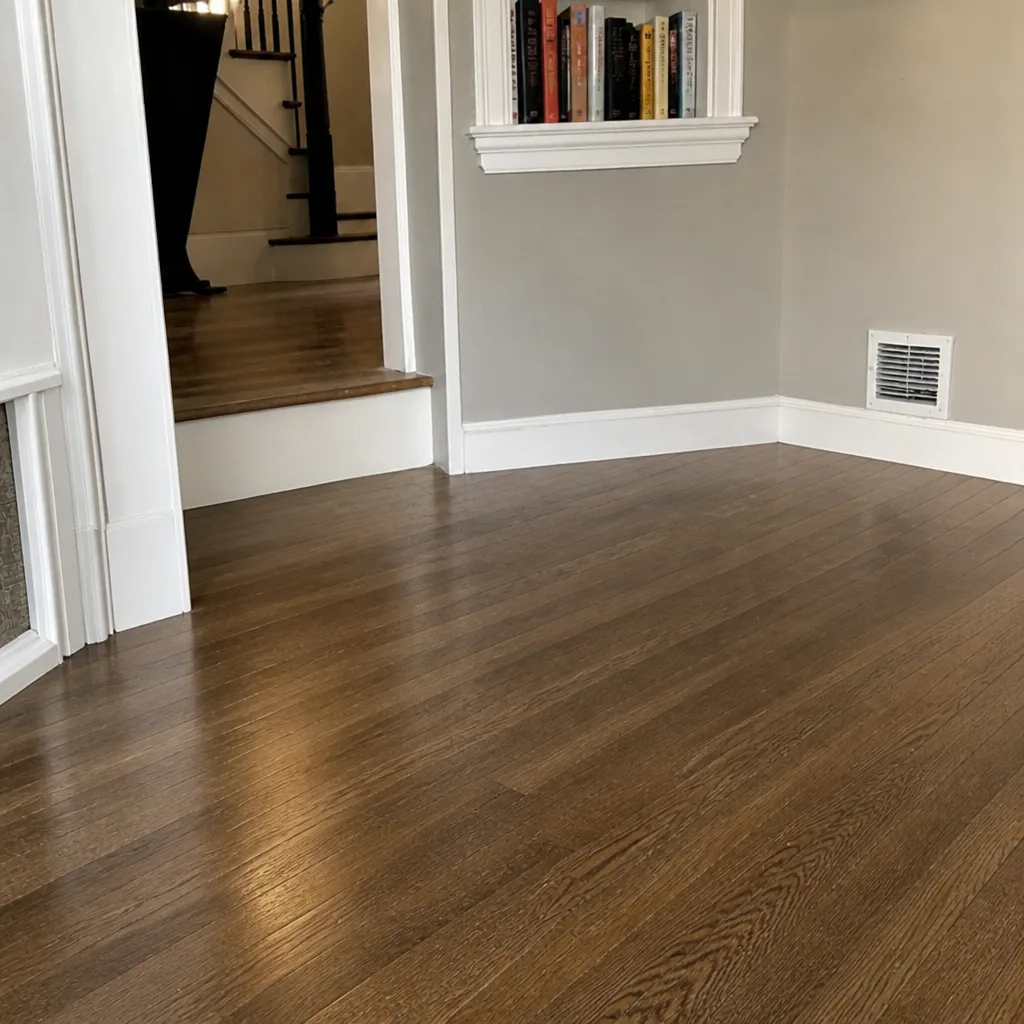 After
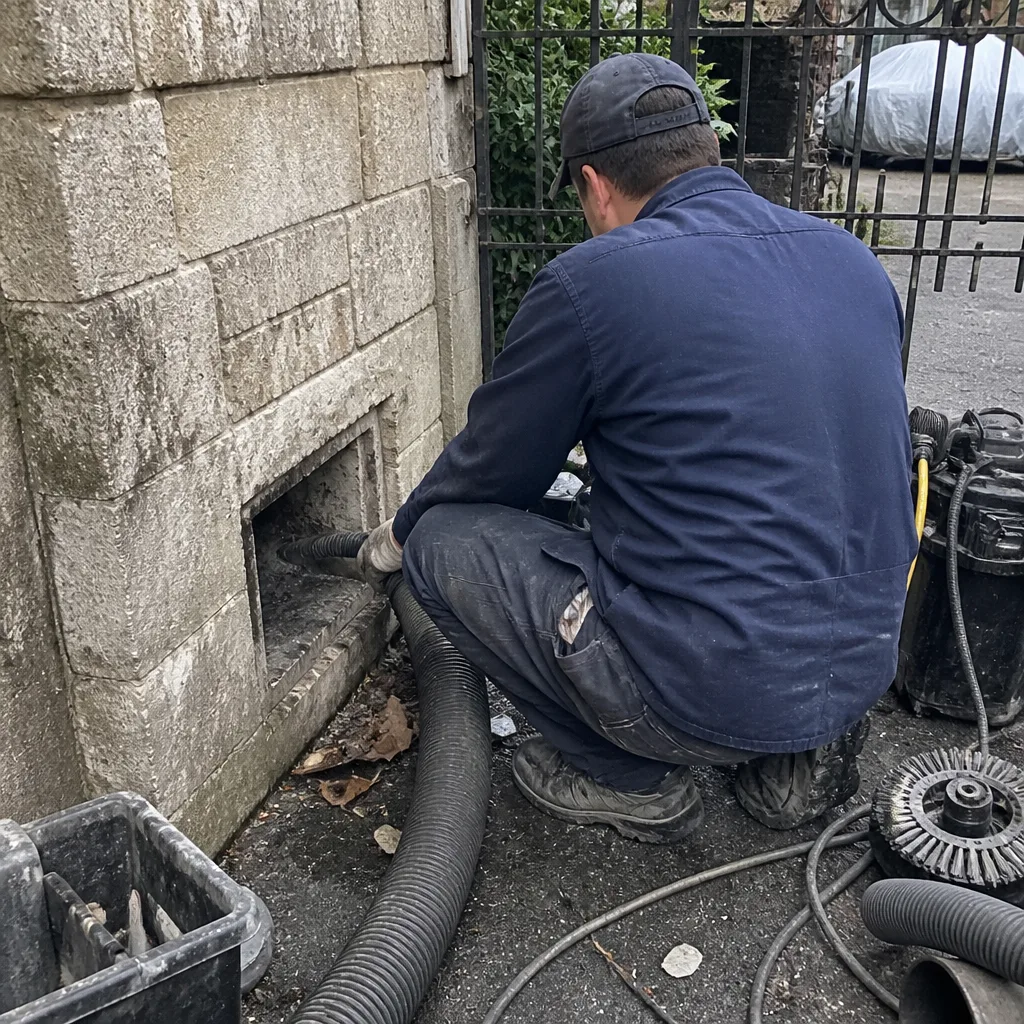 Before
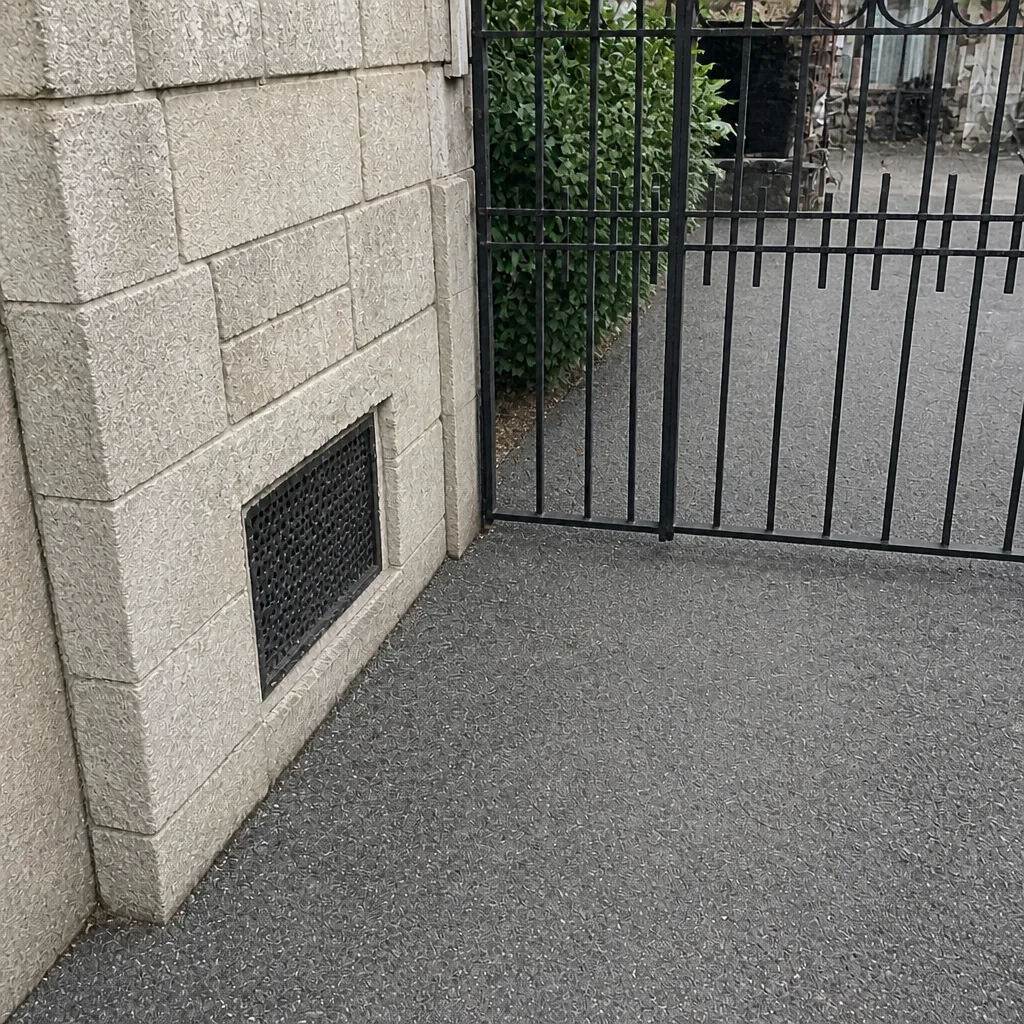 After
When to Call a Professional
Call when the smell comes back after a cleaning, when a room’s airflow drops suddenly, or when you find standing water under the air handler. Call when you see dark staining on insulation or corrosion inside ductwork you can reach. Call if your building has a shared riser and you notice smells moving between units. Call if you’re planning a renovation that will move ductwork and want the system checked before and after. And call if a quote you’ve received doesn’t match what you can see in the system: a second set of eyes on a proposal is a reasonable thing to ask for. Air Duct Cleaning Upper East Side offers free estimates in Upper East Side. Call (844) 443-3814. We answer 24/7. Fast dispatch from 7am to 7pm, Sunday through Friday.
Frequently Asked Questions
Air duct cleaning in Upper East Side is priced per system, not per vent, and the written estimate sets the final price. We quote one flat price after the walkthrough, based on the system’s size, condition, and whether repair and sealing are needed. Call (844) 443-3814 for an exact quote. Estimates are free.
A low quote usually means a limited scope: vents cleaned, air handler skipped, no containment, no sealing. Professional-grade equipment, negative-air containment, and a full inspection all cost money, and a quote that leaves those out will need the work redone sooner. Ask any contractor what’s included and what’s not before comparing numbers. Call (844) 443-3814 if you want a second estimate to compare.
You should receive before-and-after photos of your own ducts, and you should see the air handler opened and inspected. A crew that can’t show you the inside of your system before and after has given you a promise, not proof. Our written estimate and photo record are part of the job. Call (844) 443-3814 to discuss what documentation you’ll get.
For many homes, every few years is enough, but Upper East Side co-ops with shared risers, original galvanized ductwork, or heavy filter load may need it sooner. The better measure is what the air handler and coils look like, and how quickly the filter loads. Have the system inspected before deciding on a schedule. Call (844) 443-3814 for an assessment.
Because the previous cleaning didn’t reach the source: a wet drain pan, contaminated coil, or damp interior insulation inside the air handler. Ducts downstream of a wet zone get recontaminated within months. The fix is to correct the moisture and clean the air handler, then clean and seal the ducts. Call (844) 443-3814 to have that inspected.
Yes. Shared return and exhaust risers can move odors and dust between apartments, and the ductwork where your unit meets the riser is a common place for leaks and buildup. Any diagnosis in a co-op should include those transition points. Call (844) 443-3814 to arrange a walkthrough that covers the riser connection.
The Bottom Line
Most duct problems in Upper East Side aren’t duct problems at all. They’re coil, drain pan, damper, or leakage problems that the ducts reveal. Before spending on a cleaning, do three things: check the filter and damper, look under the air handler, and ask the technician to show you what they find at the coil, the plenum, and the riser connection. If the crew can’t answer those questions, the cleaning won’t hold. If they can, and they clean, seal, and contain the job properly, you’ll get a cleaner, tighter system that stays that way. One flat price per system, before-and-after photos of your own ducts: those are the two things to insist on. Then call us.
Ready to get the system diagnosed properly? Air Duct Cleaning Upper East Side brings professional-grade Rotobrush, Nikro, and Abatement Technologies equipment to every job, along with Honeywell and Aprilaire expertise for air-quality upgrades. Call (844) 443-3814 for a free estimate. We answer 24/7. Fast dispatch from 7am to 7pm, Sunday through Friday.
Written by the team at Air Duct Cleaning Upper East Side.